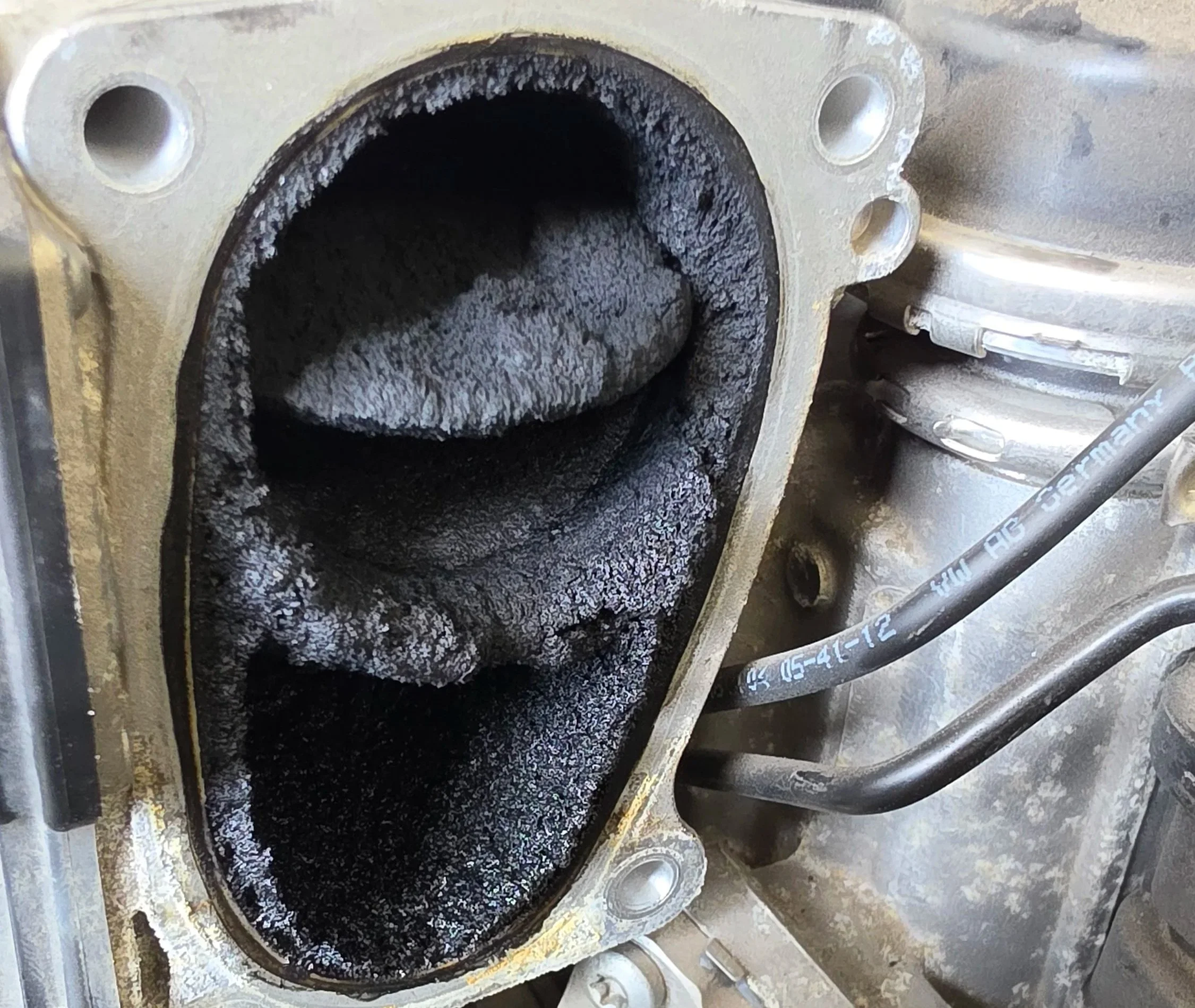

The Silent Performance Killer: Why a Blocked EGR Valve is Bad News for Your Engine
If you’ve noticed your vehicle losing its usual punch, idling roughly, or throwing a frustrating engine warning light on the dash, you might be dealing with a classic automotive headache: a blocked Exhaust Gas Recirculation (EGR) valve.
While it’s a critical component for meeting modern emissions standards, the EGR system is notoriously prone to clogging. Left ignored, a blocked EGR can trigger a domino effect of performance issues and costly mechanical failures.
Here is a breakdown of how the system works, why it blocks up, and the problems it causes for your vehicle.
What Does an EGR Valve Actually Do?
To understand the problem, it helps to understand the job. The EGR valve recirculates a small, controlled portion of your engine's exhaust gases back into the combustion chambers.
By mixing this inert exhaust gas with the fresh incoming air, the engine lowers its peak combustion temperatures. This temperature drop is vital because Nitrogen Oxides (NOx)—harmful pollutants—primarily form when the engine runs incredibly hot.
In short: the EGR valve keeps combustion temperatures down and helps your vehicle run cleaner.
Why Do EGR Systems Block Up?
The fundamental flaw of the EGR system is its environment. It constantly handles raw, unfiltered exhaust gas.
Over time, the oily vapors naturally present in the engine mix with the fine carbon soot from the exhaust. This creates a thick, sticky, black sludge.
Carbon Buildup: This sludge bakes onto the valve mechanism and inside the intake manifold.
The Stick Factor: Eventually, the soot layer becomes so thick that the mechanical valve either gets jammed wide open, stuck tightly shut, or becomes too sluggish to respond to the vehicle’s computer (ECU).
Aggravating Factors: Short journeys, stop-start city driving, and low RPMs prevent the engine from reaching temperatures high enough to naturally clear out these deposits, drastically accelerating the blockage.
The Common Problems Caused by a Faulty EGR
When the EGR valve stops operating smoothly, your engine’s delicate air-to-fuel ratio is thrown completely out of balance. Depending on whether the valve gets stuck open or closed, you will quickly notice a variety of symptoms:
1. Severe Power Loss and Hesitation
If the valve is stuck open, too much exhaust gas enters the engine when it shouldn't (like under hard acceleration). The engine becomes starved of fresh oxygen, resulting in massive flat spots, hesitation, and a distinct lack of power when you plant your foot.
2. Rough Idling and Engine Misfires
An EGR valve stuck open at a standstill allows exhaust gases to dilute the air-fuel mixture while the engine is trying to idle. This causes a erratic, bumpy idle, violent vibrations, or causes the engine to stall completely at traffic lights.
3. Reduced Fuel Economy
When the ECU realizes the EGR system isn't delivering the correct airflow, it frequently compensates by pumping more fuel into the cylinders. You’ll find yourself visiting the fuel pump far more often to cover the same mileage.
4. Knocking, Pinging, and High Temps
If the valve is stuck closed, no exhaust gas is recirculated. While the car might seem to run fine at first, combustion temperatures skyrocket. This can lead to engine knocking or pinging (pre-ignition), which can cause permanent internal engine damage over time.
5. Limp Mode and Warning Lights
Modern vehicles constantly monitor the EGR position and air flow metrics. The moment the valve fails to respond correctly, the dashboard will illuminate with a Check Engine Light (CEL), often accompanied by the dreaded "Limp Mode"—a safety state that severely caps your engine's power to prevent further damage.
The Costly Domino Effect: DPF and Turbo Issues
A blocked EGR valve doesn't just affect drivability; it places a massive burden on other expensive components, particularly in diesel vehicles.
Because a malfunctioning EGR causes incomplete, inefficient combustion, the engine produces vastly more raw soot. This excessive soot travels down the exhaust line and rapidly overloads the Diesel Particulate Filter (DPF). A clogged EGR is one of the leading primary causes behind premature DPF failure and choked turbocharger vanes.
How to Fix the Problem
If you suspect your EGR valve is choking your engine, you generally have a few routes to resolve it:
Physical Cleaning: If caught early enough, the valve can sometimes be removed and chemically cleaned with heavy-duty carbon dissolvers to restore movement.
Replacement: If the internal electronic actuator or internal gears are stripped or damaged by the restriction, a complete replacement unit is required.
Software Solutions: For vehicles plagued by recurring failures or those looking to permanently solve the root issue, specialized software remapping can calibrate the vehicle's ECU to manage or safely bypass the system's fault codes, preventing the vehicle from entering limp mode.
The Bottom Line: An EGR system needs to breathe clearly to keep your vehicle running efficiently. Addressing a carbon-choked valve early protects your performance, preserves your fuel economy, and prevents small bugs from turning into four-figure repair bills.