

The "Ghost" Stage 2: How I Fixed a BMW That Wasn't Running Right
A customer rolls in with a BMW. He's convinced it's got a Stage 2 tune because that's what the seller told him when he bought it. He's expecting a beast. What he gets? A car that feels sluggish, has a nasty flat spot right after 3,000 RPM, and sounds like it's choking.
That was the story with a recent BMW project.
The Mystery: Hardware vs. Software
The owner had the receipts for the hardware: a new larger intercooler, a full straight-through exhaust system, a performance air intake, and even a new clutch. But the driving experience told a different story. The power would drop off a cliff just after 3,000 RPM, like the turbo was cutting out or the fueling was starving the engine.
He was told this was a "Stage 2" map. But when I pulled the full ECU file, the truth was shocking.
It wasn't even a Stage 1.
The file currently in the ECU was a generic, poorly calibrated map that completely ignored the hardware upgrades sitting under the hood. It was a "ghost" tune—a file that claimed to be advanced but was actually holding the car back. The hardware was ready for a serious power bump, but the software was acting like the car was still stock.
The Process: Resetting the Baseline
I couldn't just overwrite the bad file; I needed a clean slate to work from.
OBD ORI Write: I used Flex VR to perform an OBD ORI write, flashing a verified stock file directly onto the ECU. This wiped out the messy, corrupted tune and restored the car to its factory baseline. Huge thanks to the Flex team for the rock-solid tooling that made this safe and reliable.
Bench Read: With the ECU now running a clean stock file, I performed a full bench read. This gave me a pristine, error-free copy to work from, ensuring no hidden corruption from the previous "tune" would carry over into my custom map.
The Real Stage 2
Now that I had a solid foundation, I got to work. Since the hardware was already installed, I didn't need to hold back. I built a custom Stage 2 map that actually utilized the upgraded components.
Airflow Optimization: The map was tuned to take full advantage of the larger intercooler, straight-through exhaust, and intake. This eliminated the heat soak and restriction that were causing the flat spot.
Clutch Management: With the new clutch installed, I adjusted the torque limits and launch control parameters to ensure the power transfer was smooth and efficient, preventing slip without sacrificing acceleration.
Boost & Timing: Recalibrated to deliver a smooth, linear power curve from idle to redline, finally letting the engine breathe as it was designed to.
Note: For this specific build, the stock fueling system was more than capable of handling the Stage 2 gains, so no injector or pump upgrades were necessary.
The result? The flat spot vanished. The power delivery became seamless, and the car finally felt like the performance machine it was meant to be. The customer went from frustrated to ecstatic in about an hour.
The Takeaway
Buying a "tuned" car is a gamble. Just because a seller says "Stage 2" doesn't mean the software matches the hardware. If your car has the upgrades but feels like it's stuck in neutral, it's likely the tune is the problem, not the car.
A real tune isn't just about flashing a file; it's about matching the software to the hardware. And when you do it right, the difference isn't just numbers on a dyno—it's the smile on the driver's face when they hit the throttle.
Got a BMW that feels "off"? Let's pull the file and see what's really going on.
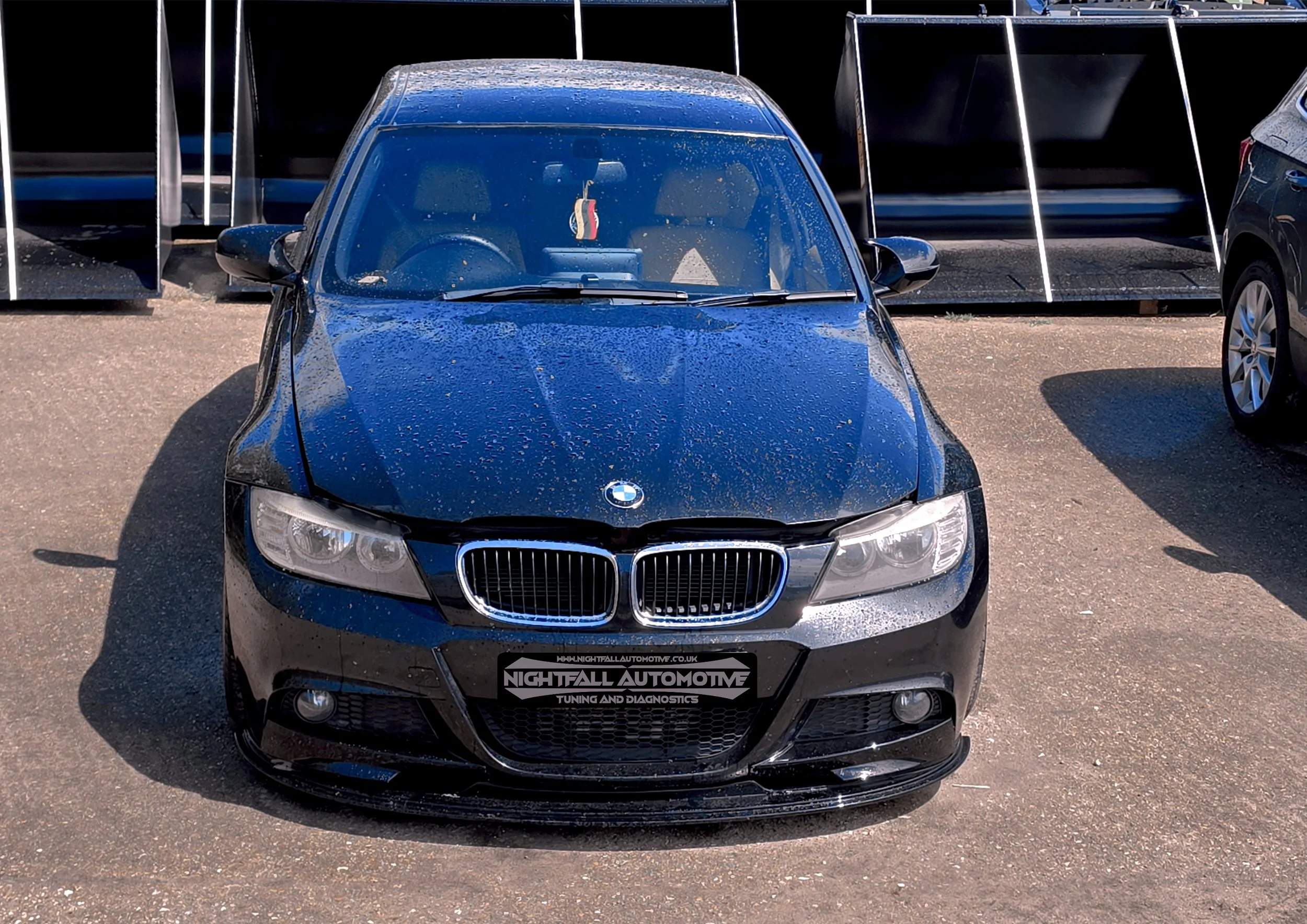
BMW 320D