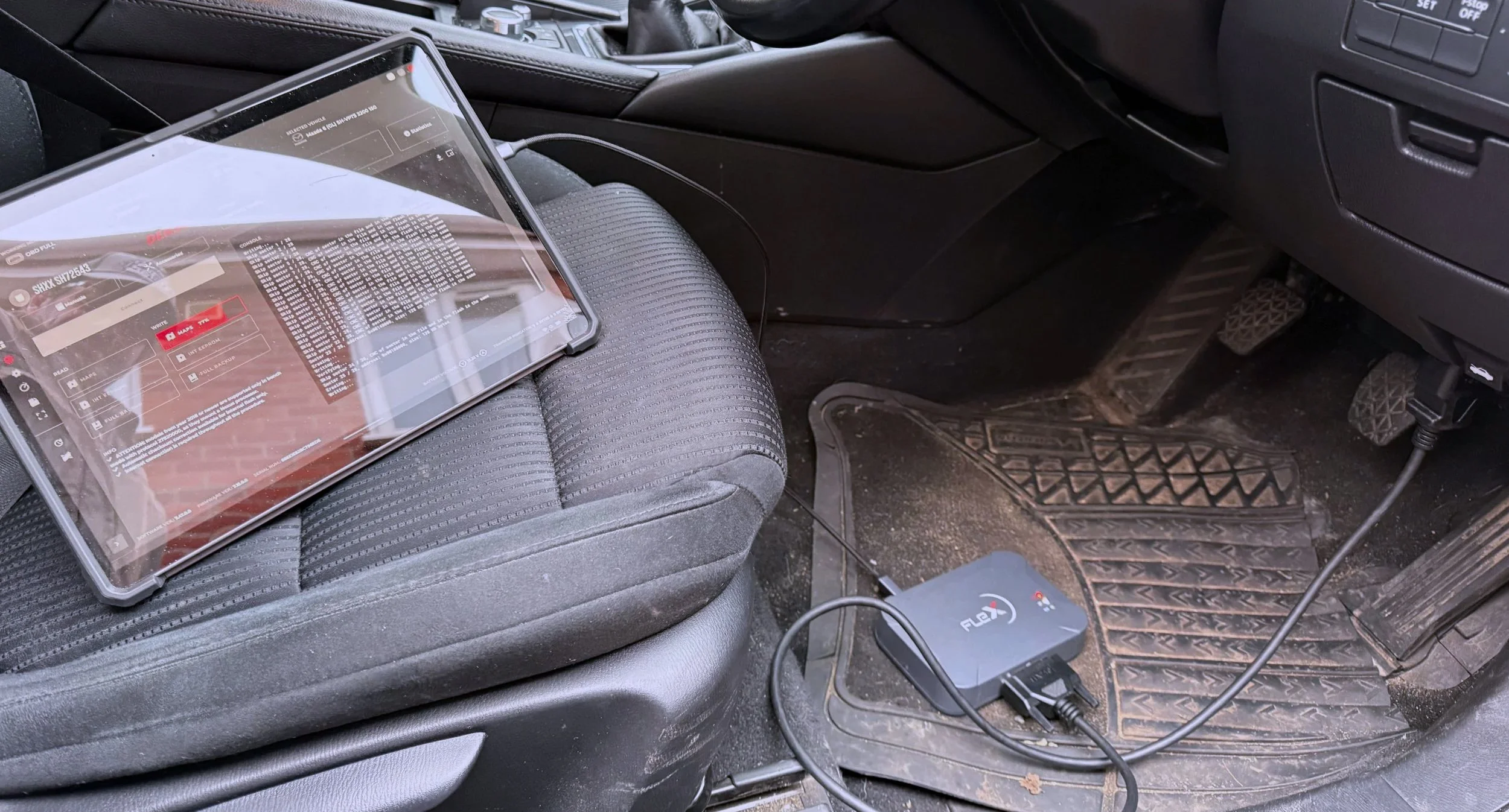

The Nightfall Standard: Why Every Tune Starts With a Health Check
At Nightfall Automotive, I don’t just "write files" to your ECU. A performance tune is a high-stress event for your engine, and if the hardware isn’t 100% healthy, the software can’t do its job properly.
That’s why every mobile tuning session starts with the Nightfall Health Check. This isn't an "add-on" or a hidden fee—it is included in the price because I refuse to tune a car that isn't ready for it.
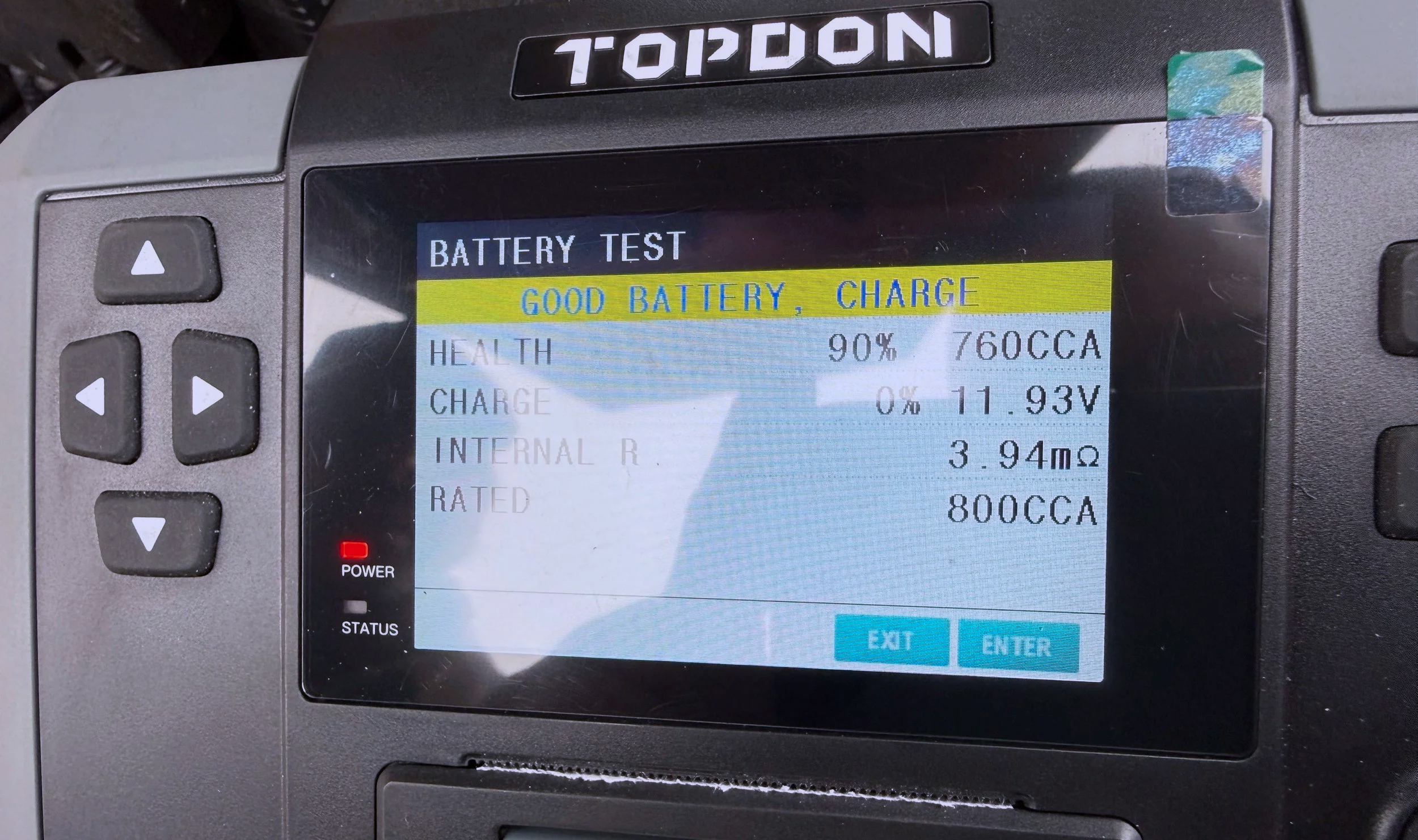
Electrical Diagnostics & Topdon Analysis
The "write" process is the most sensitive part of tuning. To ensure total safety, I use a Topdon Battery Tester to analyze your electrical system before we begin. You’ll get a professional printout confirming if your battery is Good, Needs Charging, or Requires Replacement.
While voltage below 12.5V can cause communication errors between the ECU and other modules, it won't stop our session. I utilize a professional battery stabilizer during the flash to maintain a constant, clean power supply, ensuring your ECU remains protected even if your battery health is currently low.
1. The Electrical "Safe-Flash" Check
The most critical moment of tuning is the "write" process. If your voltage drops while I’m flashing the ECU, you risk bricking the module.
What I do: I perform a full battery health check before we even connect the software.
2. Full System Diagnostic Scan
Before we push the limits, we check for "ghost codes." Not every fault triggers a Check Engine Light (CEL), but they can still cause the ECU to pull timing or limit fueling.
What I do: I run a deep-level scan of your control modules to ensure every sensor is reporting accurately.
3. Targeted Smoke Testing (The Backup Plan)
Boost and vacuum leaks are the silent killers of performance. If a car is struggling to hit target boost or showing erratic fuel trims during my initial checks, we don't guess—we find the leak.
What I do: If my diagnostics indicate a physical leak, I’ll perform a professional smoke test of your intake tract right there on the spot. We find the pinhole leak or the loose coupler before it turns into a blown turbo.
4. What YOU Need to Bring to the Table
While I handle the diagnostics and the "health" of the car, you just need to handle the basics:
The "Same Tank" Rule: Show up with at least 2/4 of a tank of the exact fuel you want to be tuned for (e.g., 99 Octane).
Maintenance Items: Ensure your spark plugs (Petrol vehicle) are fresh and your oil/coolant levels are topped up.
Safety First: Your tires, brakes, and clutch need to be in good condition to handle the extra torque we’re about to unlock.
The Nightfall Philosophy: You aren’t just paying for a file; you’re paying for the peace of mind that your car was professionally vetted and diagnosed before the power was turned up.